Introduction
German may sound strong and precise, but its affectionate vocabulary can be incredibly warm, playful, and charming. German speakers use Kosenamen and Koseworte—pet names and terms of endearment—to express affection toward partners, children, family members, and close friends.
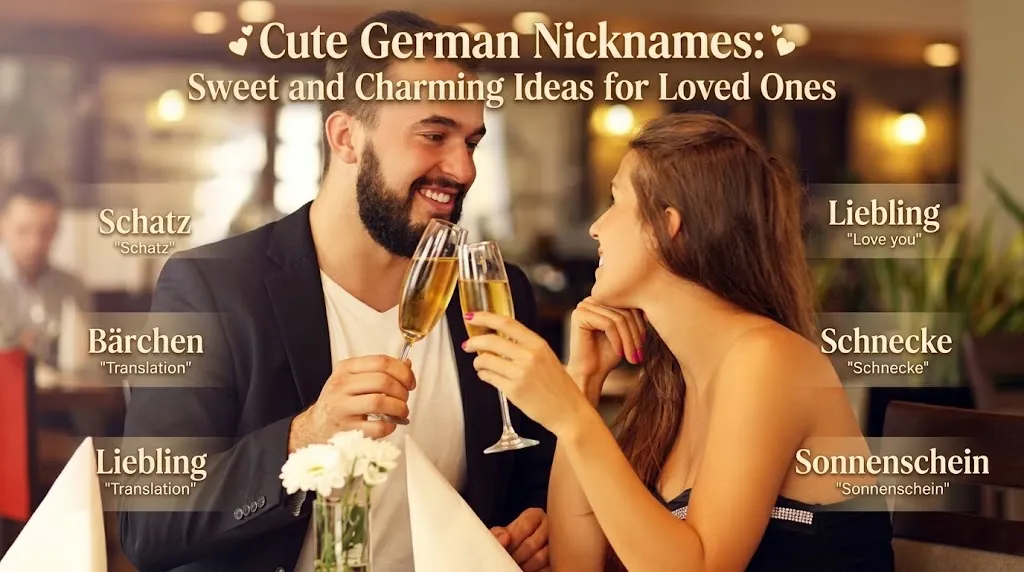
From classic choices like Schatz and Liebling to playful names such as Hasi, Mausi, Bärchen, and Schatzi, there are plenty of German nicknames for every personality and relationship.
Whether you need a romantic nickname for your partner, a cute name for a friend, a sweet family nickname, or a creative German-inspired username, this collection has plenty of ideas to choose from.
Cute German Nicknames at a Glance
| Nickname | Meaning | Best For |
| Schatz | Treasure/darling | Loved one |
| Schatzi | Little treasure | Partner |
| Liebling | Darling/favorite | Partner |
| Hasi | Little bunny | Partner or child |
| Häschen | Little bunny | Loved one |
| Mausi | Little mouse | Partner or child |
| Mäuschen | Little mouse | Loved one |
| Bärchen | Little bear | Partner or child |
| Engelchen | Little angel | Loved one |
| Herzchen | Little heart | Romantic |
| Süße | Sweetie | Girl or woman |
| Süßer | Sweetie | Boy or man |
| Schnucki | Cutie/sweetie | Partner |
| Spatz | Sparrow | Loved one |
| Sonnenschein | Sunshine | Cheerful person |
Cute German Nicknames for Loved Ones
These sweet German nicknames are perfect when you want something affectionate, charming, and easy to remember. Many are short enough for everyday conversations or text messages.
- Schatz
- Schatzi
- Schätzchen
- Liebling
- Hasi
- Häschen
- Mausi
- Mäuschen
- Bärchen
- Schnucki
- Herzchen
- Engelchen
- Spätzchen
- Knuddel
- Sonnenschein
- Herzblatt
- Liebes
- Kuschelbär
- Zuckerhase
- Herzensmensch
Romantic German Nicknames for Your Partner
Romantic German pet names can sound tender without being complicated. These choices work well for couples who want something sweet for private conversations, texts, or contact names.
- Mein Schatz
- Meine Liebe
- Mein Liebling
- Meine Süße
- Mein Süßer
- Mein Herz
- Herzblatt
- Herzchen
- Liebste
- Liebster
- Mein Engel
- Engelchen
- Schatzi
- Häschen
- Bärchen
- Kuschelherz
- Herzensmensch
- Mein Sonnenschein
- Meine Schönheit
- Mein Glück
Sweet German Nicknames for a Girlfriend
Feminine German pet names can be soft, romantic, playful, or elegant. You can choose a classic expression or something that reflects her personality.
- Süße
- Meine Süße
- Mausi
- Hasi
- Häschen
- Schatz
- Schatzi
- Liebling
- Liebste
- Engelchen
- Herzchen
- Prinzessin
- Sonnenschein
- Hübsche
- Kleine
- Schönheit
- Blümchen
- Sternchen
- Perle
- Herzensdame
Sweet German Nicknames for a Boyfriend
For a boyfriend, masculine forms such as Süßer and Hübscher can work beautifully, while classic names like Schatz and Liebling remain broadly useful.
- Süßer
- Mein Süßer
- Hübscher
- Schatz
- Schatzi
- Liebling
- Liebster
- Bärchen
- Kuschelbär
- Hase
- Hasi
- Mein Engel
- Löwe
- Held
- Mein Herz
- Sonnenschein
- Herzensmensch
- Tiger
- Starker
- Mein Glück
German Nicknames for Girls
These nicknames can work for daughters, sisters, friends, or romantic partners depending on the relationship and context.
- Mausi
- Mäuschen
- Hasi
- Häschen
- Süße
- Engelchen
- Püppi
- Prinzessin
- Herzchen
- Sternchen
- Blümchen
- Kleine
- Sonnenschein
- Schnecke
- Perle
- Bienchen
- Wölkchen
- Schätzchen
- Liebes
- Zuckermaus
German Nicknames for Boys
German nicknames for boys can be cute, funny, energetic, protective, or affectionate. These choices work especially well for children, siblings, friends, and close loved ones.
- Bärchen
- Hase
- Hasi
- Spatz
- Schatz
- Schatzi
- Kleiner
- Süßer
- Engelchen
- Löwe
- Held
- Tiger
- Kuschelbär
- Knuddel
- Sonnenschein
- Racker
- Wirbelwind
- Frechdachs
- Glückspilz
- Herzensjunge
German Nicknames for Friends
German friendship nicknames can be casual, funny, teasing, or complimentary. Unlike romantic pet names, these choices often emphasize friendship and familiarity.
- Kumpel
- Spezi
- Alter
- Homie
- Freundchen
- Kamerad
- Keule
- Legende
- Chef
- Kerl
- Quatschkopf
- Schlafmütze
- Pechvogel
- Wirbelwind
- Racker
- Spaßvogel
- Schlawiner
- Frechdachs
- Chaot
- Tollpatsch
German Nicknames for Family
Family nicknames often become unique over time. Some are affectionate versions of family titles, while others are playful names shared within the family.
- Schatz
- Schätzchen
- Mäuschen
- Engelchen
- Häschen
- Bärchen
- Schwesterherz
- Bruderherz
- Omi
- Opi
- Omilein
- Opilein
- Mamalein
- Papilein
- Knöpfchen
- Herzchen
- Sonnenschein
- Kleines
- Lieblingsmensch
- Familienherz
Cute German Nicknames for Children
German diminutives are particularly useful for children’s nicknames because they can make words sound smaller, softer, and more affectionate.
- Schätzchen
- Mäuschen
- Häschen
- Engelchen
- Bärchen
- Spätzchen
- Knöpfchen
- Püppchen
- Wölkchen
- Sternchen
- Bienchen
- Vögelchen
- Häsilein
- Herzchen
- Sonnenschein
- Käferchen
- Blümchen
- Käuzchen
- Bärlein
- Zuckerchen
German Animal Nicknames
Animal-based pet names are a memorable part of German affectionate vocabulary. Many become especially cute when paired with diminutive endings.
- Maus — Mouse
- Mausi — Little mouse
- Mäuschen — Little mouse
- Hase — Hare/bunny
- Hasi — Little bunny
- Häschen — Little bunny
- Bär — Bear
- Bärchen — Little bear
- Spatz — Sparrow
- Spätzchen — Little Sparrow
- Schnecke — Snail
- Schneckchen — Little snail
- Kätzchen — Kitten
- Bienchen — Little bee
- Schmetterling — Butterfly
- Käferchen — Little beetle
- Vögelchen — Little bird
- Löwe — Lion
- Tigerchen — Little tiger
- Fuchs — Fox
German Nicknames Inspired by Food and Sweetness
Food-inspired nicknames are playful and memorable. They can work especially well for people who enjoy cute, humorous, or slightly quirky pet names.
- Zuckerschnute
- Zuckersüß
- Honigbiene
- Honigmäulchen
- Törtchen
- Keks
- Kekse
- Knöpfchen
- Sahneschnitte
- Erdbeerchen
- Schokolädchen
- Zuckerherz
- Honigbär
- Süßmäuschen
- Zuckerhase
- Honigherz
- Zuckermäuschen
- Schokobär
- Kekschen
- Honigkuchen
Beautiful and Aesthetic German Nicknames
If you want something more elegant than childish, choose words connected with stars, nature, light, beauty, and affection.
- Herzblatt
- Sonnenschein
- Sternchen
- Mondschein
- Blümchen
- Perle
- Glanz
- Glitzer
- Schönheit
- Engel
- Schmetterling
- Rosenblüte
- Wölkchen
- Liebes
- Herzensmensch
- Sonnenkind
- Sternenherz
- Silberherz
- Nachtstern
- Traumherz
Funny German Nicknames
Funny nicknames are often most memorable when they describe a harmless habit, personality trait, or funny inside joke.
- Quatschkopf
- Schlafmütze
- Pechvogel
- Wirbelwind
- Racker
- Schlawiner
- Frechdachs
- Tollpatsch
- Chaot
- Spaßvogel
- Nasenbär
- Träumer
- Langschläfer
- Knallkopf
- Kleiner Wirbelwind
- Quasselstrippe
- Schnarchnase
- Bummelant
- Spaßkanone
- Blödelkönig
Short German Nicknames
Short nicknames are perfect for contact names, texting, gaming, social media, and everyday conversations.
- Schatz
- Maus
- Hase
- Hasi
- Bär
- Spatz
- Engel
- Keks
- Süße
- Süßer
- Knuddel
- Liebling
- Mausi
- Spezi
- Kumpel
- Löwe
- Tiger
- Perle
- Herz
- Schatzl
Unique German Nicknames You Can Create Yourself
German compound words and diminutive patterns make it easy to create personalized nickname ideas. These creative combinations can be especially useful when you want something that feels unique to one relationship.
- Sonnenhase
- Honigbärchen
- Zuckerhase
- Kuschelmaus
- Sternchenherz
- Wolkenbär
- Herzenshase
- Kuschelherz
- Sonnenbärchen
- Zuckermausi
- Honigherzchen
- Sternenmaus
- Kuschelhäschen
- Glücksbärchen
- Herzensmensch
- Mondhase
- Wolkenherz
- Sonnenmaus
- Traumhäschen
- Glücksherzchen
Why Do German Nicknames Sound So Cute?
One reason is the German diminutive system. The suffix -chen can make a noun sound smaller or more affectionate.
For example:
- Bär → Bärchen — bear → little bear
- Maus → Mäuschen — mouse → little mouse
- Hase → Häschen — hare/bunny → little bunny
- Herz → Herzchen — heart → little heart
- Stern → Sternchen — star → little star
The suffix -lein can also create diminutive forms, while informal -i forms appear in nicknames such as Mausi, Hasi, and Schatzi.
What Does Schatz Mean in German?
Schatz literally means “treasure.” When used as a term of endearment, it commonly means “darling,” “sweetheart,” or “sweetie.”
It is one of the best-known German pet names and can be used affectionately for different types of close relationships.
What Does Schatzi Mean?
Schatzi is an affectionate form derived from Schatz.
It has a playful and softer feeling than the basic word and can be understood approximately as “little treasure” or “sweetheart.”
What Does Hasi Mean in German?
Hasi comes from Hase, meaning hare or bunny.
As a nickname, it has a cute and informal feeling. It can be used affectionately with a partner, child, or another person with whom you have a close relationship.
What Does Mausi Mean?
Mausi comes from Maus, meaning “mouse.”
As a nickname, it is usually an affectionate expression rather than a literal comparison. Related forms include Mäuschen and other diminutive variations.
What Does Bärchen Mean?
Bärchen comes from Bär, meaning “bear,” combined with the diminutive ending -chen.
The approximate meaning is “little bear.” It can create a warm, cuddly, and affectionate feeling.
German Nicknames With Meanings
| German Nickname | English Meaning | Vibe |
| Schatz | Treasure/darling | Classic |
| Schatzi | Little treasure | Playful |
| Liebling | Darling | Warm |
| Süße | Sweetie | Feminine |
| Süßer | Sweetie | Masculine |
| Hasi | Little bunny | Cute |
| Häschen | Little bunny | Soft |
| Mausi | Little mouse | Playful |
| Mäuschen | Little mouse | Tender |
| Bärchen | Little bear | Cuddly |
| Engelchen | Little angel | Sweet |
| Herzchen | Little heart | Romantic |
| Spatz | Sparrow | Traditional |
| Schnucki | Cutie/sweetie | Playful |
| Sonnenschein | Sunshine | Cheerful |
| Herzblatt | Sweetheart | Romantic |
| Perle | Pearl | Elegant |
| Glückspilz | Lucky person | Playful |
| Löwe | Lion | Strong |
| Kuschelbär | Cuddle bear | Cute |
German Nicknames for Social Media
Social-media nicknames should be short, memorable, and visually appealing. A German-inspired name can give an Instagram, TikTok, gaming, or profile identity a distinctive feel.
- Löwenherz
- Sternchen
- Sonnenschein
- Wolkenherz
- Kuschelmaus
- Zuckerhase
- Nachtstern
- Herzensmensch
- Mondschein
- Glückspilz
- Silberherz
- Traumhase
- Sonnenkind
- Wildblume
- Sternenherz
- Mondherz
- Traumstern
- Sonnenherz
- Wolkenkind
- Glitzerherz
How to Create Your Own German Nickname
You don’t need to choose a nickname from a fixed list. Creating a personalized combination can make the nickname more meaningful.
Step 1: Choose a Personality Trait
Think about what describes the person.
- Sweet → Zucker
- Warm → Sonne
- Strong → Bär
- Playful → Hase
- Cheerful → Sonnenschein
- Gentle → Engel
Step 2: Add a Diminutive
Try -chen, -lein, or an informal -i form where appropriate.
Examples:
Bär → Bärchen
Herz → Herzchen
Schatz → Schatzi
Step 3: Combine Two Affectionate Ideas
You can experiment with combinations such as:
Sonne + Hase = Sonnenhase
Honig + Bärchen = Honigbärchen
Kuschel + Maus = Kuschelmaus
Step 4: Say It Aloud
A nickname may look cute in writing but sound Awkward when spoken. Choose something that feels natural in everyday conversation.
How to Choose the Right German Nickname
The right nickname depends on the relationship, personality, and situation.
For a Romantic Partner
Try:
Schatz, Schatzi, Liebling, Herzchen, Hasi, Mausi, Bärchen
For a Close Friend
Try:
Kumpel, Spezi, Alter, Legende, Quatschkopf, Schlafmütze
For a Child
Try:
Schätzchen, Mäuschen, Häschen, Engelchen, Bärchen, Spätzchen
For a Sibling
Try:
Schwesterherz, Bruderherz, Schatz, Racker, Wirbelwind
For Social Media
Try:
Löwenherz, Sternchen, Mondschein, Sonnenschein, Herzensmensch
German Nicknames You Should Use Carefully
Not every cute-looking German word has the same emotional effect everywhere.
Schnecke, for example, literally means “snail” but can be used affectionately. Teasing names such as Quatschkopf, Schlafmütze, and Pechvogel also depend heavily on tone and the relationship between the people.
A nickname that sounds hilarious between close friends may sound strange or rude when used by someone unfamiliar.
German Nicknames and Formality
German has an important social distinction between du and Sie.
Affectionate nicknames generally belong in informal relationships where du is appropriate. They would normally feel out of place in formal interactions with a boss, professor, customer, or another person you address with Sie.
Understanding this distinction helps German learners use nicknames more naturally.
Are German Animal Nicknames Really Common?
Yes, animal-based endearments are a recognizable part of German pet-name vocabulary.
Words such as Maus, Hase, Bärchen, and Spatz can communicate warmth, familiarity, playfulness, or tenderness.
The literal animal isn’t necessarily the point. In affectionate language, the emotional meaning and relationship often matter more than the dictionary definition.
German Nicknames for Different Personalities
| Personality | Nickname Ideas |
| Sweet | Süße, Süßer, Zuckerhase |
| Cute | Hasi, Mausi, Bärchen |
| Cheerful | Sonnenschein |
| Gentle | Engelchen |
| Strong | Bär, Löwe |
| Funny | Quatschkopf |
| Sleepy | Schlafmütze |
| Playful | Racker |
| Romantic | Herzchen |
| Elegant | Perle |
| Adventurous | Wirbelwind |
| Lucky | Glückspilz |
| Friendly | Kumpel |
| Warm | Herzensmensch |
| Cuddly | Knuddel |
Best German Nicknames by Relationship
| Relationship | Nicknames |
| Girlfriend | Süße, Mausi, Hasi, Schatzi |
| Boyfriend | Süßer, Schatz, Bärchen, Liebling |
| Wife | Schatz, Liebling, Herzchen, Schatzi |
| Husband | Schatz, Liebster, Bärchen, Herz |
| Best friend | Kumpel, Spezi, Legende, Freundchen |
| Sister | Schwesterherz, Mausi, Kleine, Sonnenschein |
| Brother | Bruderherz, Racker, Kumpel, Kleiner |
| Daughter | Mäuschen, Häschen, Engelchen, Sternchen |
| Son | Bärchen, Spätzchen, Kleiner, Sonnenschein |
| Child | Schätzchen, Bärchen, Häschen, Engelchen |
People Also Ask
A: Popular cute German nicknames include Schatz, Schatzi, Hasi, Mausi, Bärchen, Mäuschen, and Engelchen.
A: Schatz is one of the most common German terms used like “sweetheart” or “darling.” Liebling is another affectionate option.
A: Schatz literally means “treasure.” As a term of endearment, it can mean “darling,” “sweetheart,” or “sweetie.”
A: Schatzi is an affectionate form of Schatz with a softer and more playful feeling.
A: Hasi comes from Hase, meaning hare or bunny, and is used as a cute, informal pet name
Conclusion
Cute German nicknames reveal a much softer and more playful side of the German language. From familiar classics such as Schatz and Liebling to adorable choices like Hasi, Mausi, Bärchen, and Schatzi, there is a nickname for almost every relationship and personality.
If you want something familiar, start with Schatz. If you want something playful, try Hasi or Mausi. For a cuddly feeling, Bärchen is a charming choice, while Herzensmensch offers something more sentimental.
The best nickname isn’t necessarily the most unusual one. Choose a name that feels natural, matches the relationship, and makes the person smile. That’s what turns a simple nickname into something genuinely meaningful.